

MobX vs. Redux: Reactive Patterns in Large-Scale React Applications
A deep dive into choosing the right state management tool for high-performance applications, focusing on MobX observables and computed values.

Joan Sebastian Oviedo
Ingeniero Informático
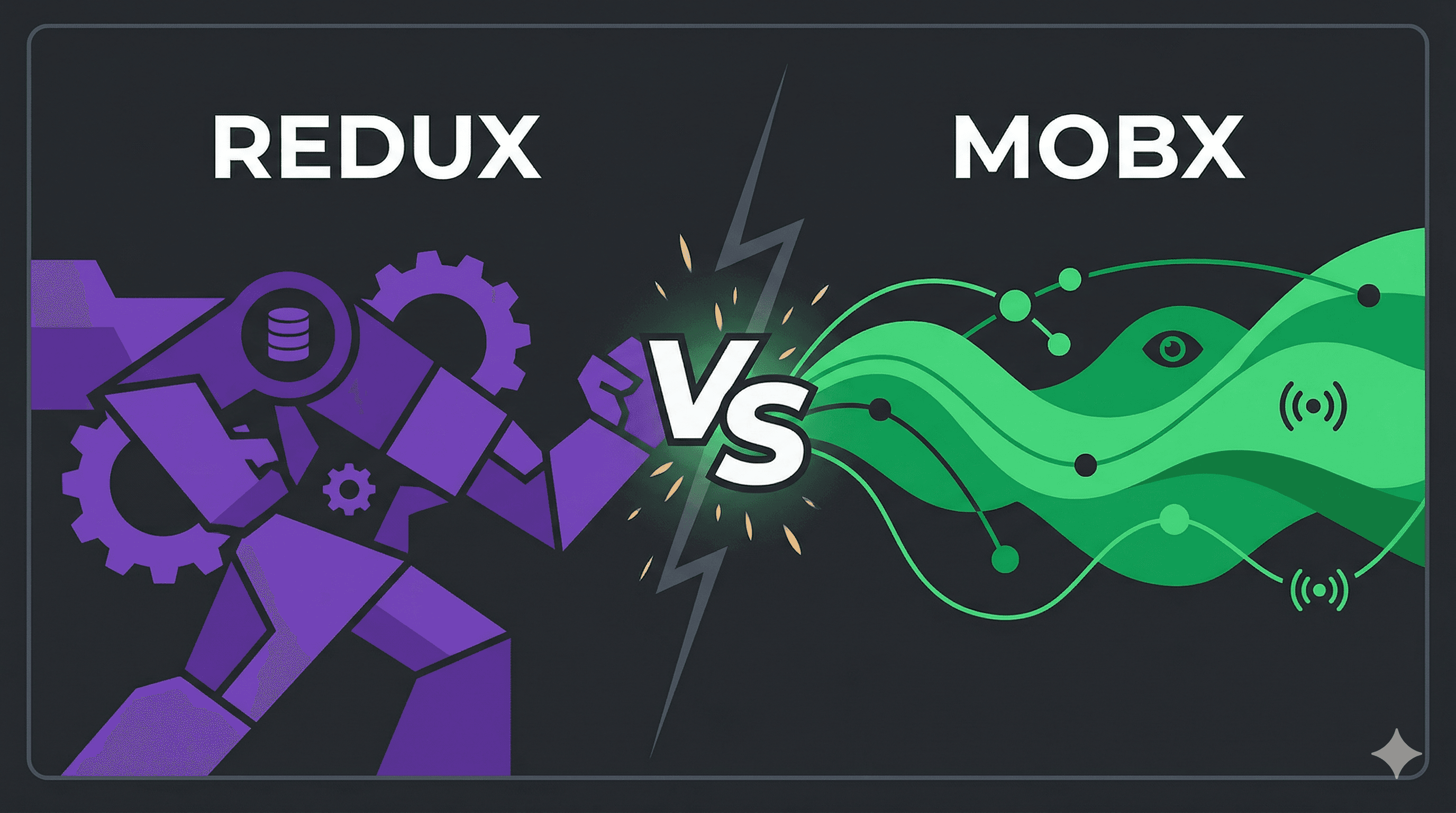
MobX vs. Redux: Choosing the Right State Management for Scalable React Apps
In my 6 years of experience crafting high-performance web applications, one of the most critical decisions I've faced is selecting a state management architecture. While Redux has long been the industry standard, MobX offers a reactive, "transparent" approach that is often superior for complex, data-driven systems.
The Boilerplate Tax vs. Reactive Simplicity
The most immediate difference is the philosophy. Redux follows a strict functional paradigm (Actions -> Reducers -> Store). This is excellent for predictability but introduces a significant amount of boilerplate.
In contrast, MobX leverages Observables and Computed Values. During my time architecting 7 key applications at Telefónica, I learned that reducing the "ceremony" of code allows teams to move faster.
Why MobX Shines in Complex Environments
When dealing with real-time data—similar to the drone air traffic control systems I worked on at INDRA —the overhead of dispatching actions for every minor UI update can become a performance bottleneck.
- Observables: You simply mark your state as
observable, and MobX tracks where it's used. - Computed Values: These are like "formulas" in a spreadsheet. They only re-calculate when their underlying observables change, which is vital for performance optimization.
- Automatic Re-rendering: Components only re-render if the specific piece of data they observe changes. This was a key factor in achieving a 30% improvement in page load times in my previous projects.
Architectural Trade-offs
Paradigm:
- Redux: Functional (Immutable)
- Mobx: Object-Oriented (Reactive/Observable)
Learning Curve:
- Redux: High (Middlewares, Thunks, Sagas)
- Low (if you know OOP/Classes)
Predictability:
- Redux: High (Single source of truth)
- Mobx: High (through "Actions" in strict mode)
Performance:
- Redux: Manual optimization required
- Mobx: Optimized by default (granular updates)
Implementing MobX with TypeScript
For a Senior Software Engineer, type safety is non-negotiable. Using TypeScript with MobX allows us to define stores as classes with clear interfaces:
import { makeAutoObservable } from "mobx"; class UserStore { username: string = "Joan Oviedo"; isOnline: boolean = false; constructor() { makeAutoObservable(this); // Makes everything reactive automatically } // Action to modify state setOnlineStatus(status: boolean) { this.isOnline = status; } // Computed value for derived state get statusMessage() { return `${this.username} is currently ${this.isOnline ? 'Online' : 'Offline'}`; }}Conclusion: Which one should you choose?
If your application is essentially a large "flow" of events where every change must be logged and undoable, Redux is a safe bet. However, for high-performance, interactive frontends where UI efficiency and development speed are priorities—like SaaS platforms or real-time monitoring tools —MobX is a powerful ally.
As a Product-Minded Engineer, I prioritize tools that balance code maintainability with the ultimate goal: delivering a seamless, user-centric experience.
▹Artículos Relacionados
Patrones de arquitectura para proyectos escalables con Next.js y App Router
Descubre cómo estructurar un proyecto Next.js con App Router de forma escalable y profesional. Aprende buenas prácticas en modularización, server components, CI/CD, testing, y más. Incluye ejemplos reales y una plantilla descargable para comenzar.
Leer más →Java Spring Boot & SDD: Implementando el Flujo Contract-First con OpenAPI
Guía técnica para automatizar tu Backend. Aprende a configurar OpenAPI Generator en Spring Boot para generar interfaces, modelos y DTOs robustos directamente desde tu especificación
Leer más →Spec-Driven Development: El Contrato como Única Verdad en el Desarrollo Web
Descubre cómo el Spec-Driven Development (SDD) elimina errores de integración entre Next.js y Java Spring Boot mediante el uso de contratos OpenAPI.
Leer más →